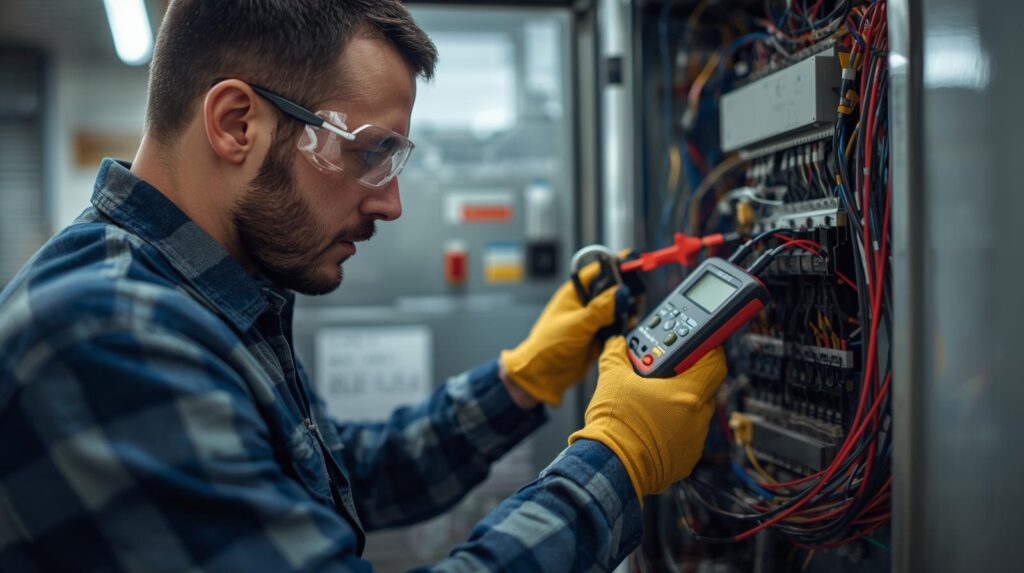
An AI-proof job is a career that relies on human-centric capabilities that Large Language Models and robotics cannot reliably replicate: complex physical dexterity, genuine emotional empathy, ethical accountability, and non-linear problem solving. While AI dominates data-heavy roles, these 15 careers remain the safest and highest-demand paths in the automated economy.
The Shift: From “Hard Skills” to “Human Skills”
By 2026, the labor market has undergone a “Great Re-skilling.” In a world where AI can write code, analyze legal contracts, and generate marketing copy in seconds, the premium has shifted. We are no longer in a “Knowledge Economy”—we are in a “Human Economy.”
The most valuable professionals today are those who master the “Last Mile”—the physical or emotional step where a machine’s logic fails and human judgment is required.
The 15 Most Resilient Careers in the Age of AI
1. Specialized Electricians (EV & Smart Grid)
AI can design a blueprint, but it cannot crawl into a 100-year-old crawlspace to troubleshoot a faulty circuit or install a bi-directional EV charging station. The “Green Energy” boom has made specialized electricians one of the most recession-proof and AI-proof roles on the planet.
2. Robotics Maintenance Technicians
It is the ultimate irony of 2026: the more we automate, the more humans we need to fix the machines. Industrial robots and automated warehouses require constant physical maintenance, sensor calibration, and hands-on repairs that AI cannot perform on itself.
3. Registered Nurses & ER Specialists
While AI-powered diagnostics (like Med-PaLM) are excellent at identifying patterns, they cannot provide “Ambient Care.” The physical labor of nursing—administering IVs, stabilizing patients in crisis, and providing comfort—remains 100% human.
4. Mental Health Counselors & Therapists
Human trauma is non-linear. While “AI Therapy Bots” exist, they lack True Empathy. In 2026, the demand for human-led therapy has skyrocketed as society navigates the psychological shifts caused by rapid technological change.
5. HVAC & Climate Control Technicians
With 2026’s extreme weather patterns, climate control is a survival necessity. This role requires complex navigation of physical environments and custom problem-solving for every building—tasks far beyond current robotic capabilities.
6. AI Ethics & Compliance Officers
Every major corporation now has a “Chief AI Officer,” but they need humans to manage the Liability. AI cannot be held legally or ethically accountable; humans must be the final “Sign-off” on automated decisions to prevent bias and legal disasters.
7. Skilled Artisans & Custom Carpenters
In a world flooded with cheap, AI-designed mass production, “The Human Touch” has become a luxury status symbol. Custom furniture, hand-built homes, and artisanal crafts are seeing a massive resurgence in value.
8. Palliative & Geriatric Care Managers
The aging population requires care that is as much emotional as it is physical. Coordinating elder care involves a level of advocacy and nuanced communication that an algorithm simply cannot master.
9. Crisis Management Consultants
When a company’s AI goes rogue or a PR disaster strikes, you don’t call a bot. You call a human who understands social nuances, political climate, and the “unwritten rules” of human behavior.
10. Investigative Journalists
AI can summarize the news, but it cannot go “undercover,” build trust with a whistleblower, or physically witness an event. Real, boots-on-the-ground journalism is more critical (and resilient) than ever.
11. Occupational & Physical Therapists
Rehabilitating a human body requires a mix of physical strength, real-time visual feedback, and psychological coaching. This is one of the lowest-risk occupations for automation.
12. High-Stakes Litigation Attorneys
While “AI Paralegals” handle the research, the courtroom remains a theater of human persuasion. Persuading a jury or negotiating a complex settlement involves a level of social intelligence that machines cannot replicate.
13. Strategic Human Resources (Employee Experience)
In 2026, HR has moved away from “Admin” (which is now automated) to “Retention.” Keeping talented humans happy in a high-stress, tech-driven world is a deeply human role.
14. Professional Athletes & Coaches
Sports are the ultimate display of human peak performance. We don’t want to watch robots play; we want to see humans overcome limits. The entire sports ecosystem—from players to coaches—is inherently AI-proof.
15. Emergency Management Directors
Disaster response requires high-stakes decision-making with incomplete data and extreme emotional pressure. Humans are—and will remain—the final authority in safety-critical roles.
2026 Job Market Outlook: Human vs. Machine
| Industry Sector | AI Impact Level | Human “X-Factor” Needed | Demand Trend |
| Skilled Trades | Very Low | Physical Dexterity | Growing |
| Healthcare | Moderate (Admin Only) | Empathy & Accountability | Extreme |
| Professional Services | High (Research Only) | Ethical Judgment | Steady |
| Creative Arts | High (Drafting Only) | Personal Perspective | Premium |
How to “AI-Proof” Your Career Today
If you aren’t in one of the 15 jobs above, you don’t need to quit your job—you need to evolve.
- Automate the Boring Stuff: Use AI to handle your scheduling, drafting, and data entry.
- Focus on the “High-Liability” Tasks: Take on responsibilities where a human must be the one to “sign off.”
- Upskill in AI Fluency: The biggest threat to your job isn’t AI—it’s a human who knows how to use AI better than you.